How to Introduce a Rescue Dog to Your Other Pets
In This Guide
Adding a rescue dog to a home with existing pets is one of the most common - and most stressful - parts of the adoption process. The good news: with a structured approach, the vast majority of multi-pet introductions go smoothly. The bad news: rushing it is the number one cause of conflict. This guide gives you a proven, step-by-step process for safe introductions.
Before Bringing Your New Dog Home
Choose the Right Dog
Not every rescue dog is suited for a multi-pet home. When searching for your new dog, pay close attention to these profile notes:
- "Good with other dogs" - Has been tested or observed with other dogs
- "Cat-tested" or "lives with cats" - Essential if you have cats
- Energy level match - A calm dog and a high-energy dog can clash
- Size compatibility - Very large dogs and very small dogs need extra supervision
If the rescue uses foster homes, the foster family can give you detailed information about how the dog interacts with other animals. This is one of the biggest advantages of foster-based rescues.
Prepare Your Home
- Set up a separate room for the new dog with their own bed, crate, food, and water
- Install baby gates to create visual barriers between spaces
- Pick up your existing pet's favorite toys and high-value chews - resource guarding is a common trigger
- Make sure your cat has vertical escape routes (cat trees, shelves, tall furniture)
Introducing Dog to Dog
Step 1: Neutral Ground Meeting
The first meeting should happen outside your home - a park, empty parking lot, or neutral sidewalk. Never introduce two dogs inside the home for the first time.
- Each dog has a separate handler. Both dogs on leash, loose grip.
- Start with a parallel walk - dogs side by side, about 10 feet apart, walking in the same direction.
- Gradually decrease distance as both dogs remain calm.
- Allow brief sniffing (3 seconds), then redirect with a cheerful walk.
- Repeat several times. Keep the energy calm and positive.
Step 2: Yard Introduction
If you have a fenced yard, let them interact off-leash (leashes can create tension) while you supervise closely. Keep the session short - 10 to 15 minutes. Watch for loose, wiggly body language (good) versus stiff postures and hard stares (bad).
Step 3: Indoor Introduction
Bring both dogs inside with baby gates separating them. Let them see and smell each other without direct contact. Gradually remove barriers over the following days as they demonstrate calm behavior.
Introducing Dog to Cat
Cat introductions require even more patience. Cats are territorial and need to feel safe before they'll accept a canine roommate.
Phase 1: Complete Separation (Days 1-3)
Keep the new dog and existing cat in entirely separate spaces. Let them discover each other's scent through closed doors. Swap blankets between the two rooms so each animal gets used to the other's smell.
Phase 2: Visual Introduction (Days 3-7)
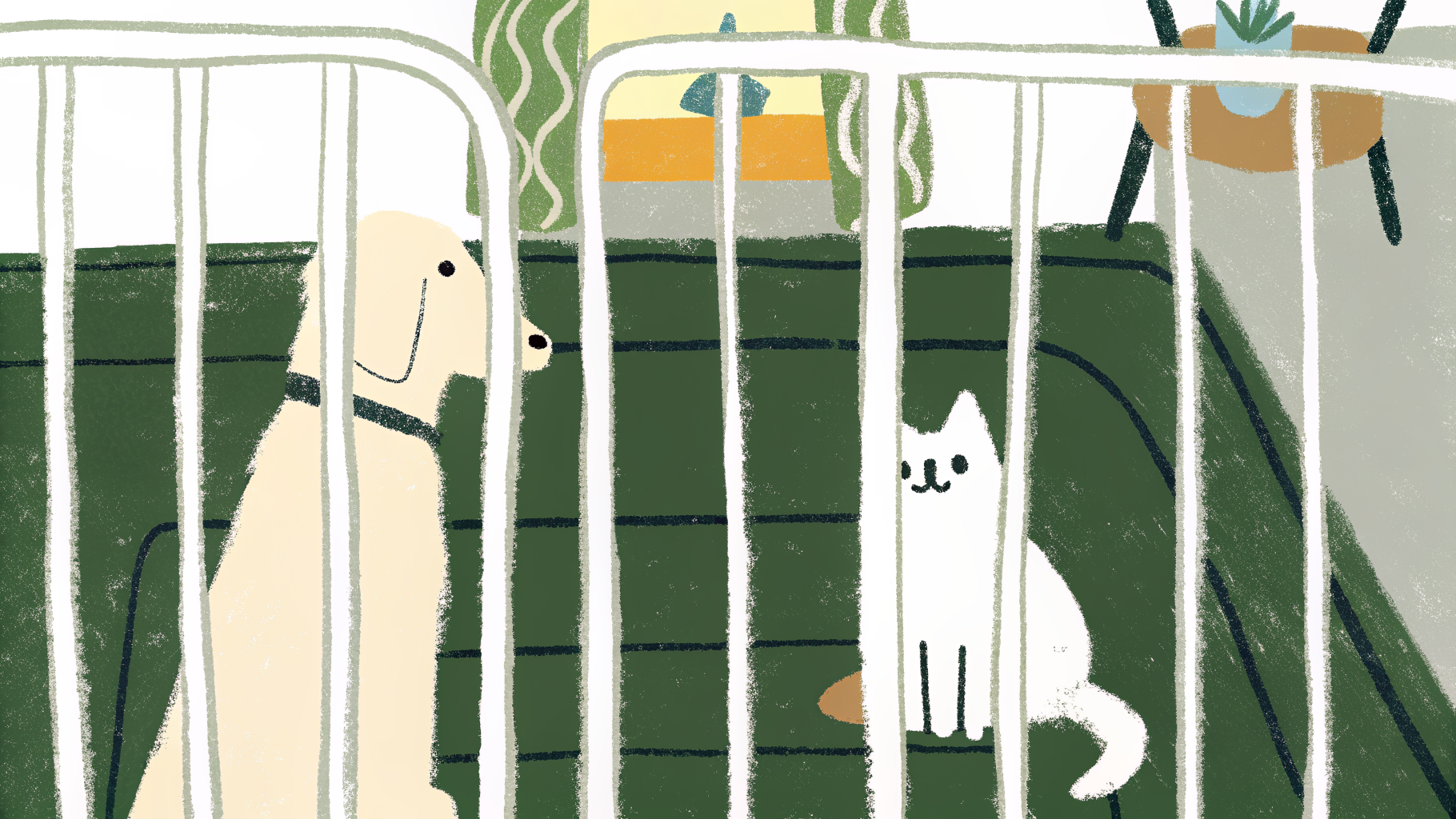
Use a baby gate or cracked door so they can see each other without physical contact. The dog should be on leash. Reward calm behavior with treats on both sides of the gate. If the dog fixates, lunges, or becomes intensely focused, redirect and increase distance.
Phase 3: Supervised Contact (Week 2+)
With the dog on a loose leash, allow the cat to move freely. The cat should always have an escape route (high furniture, another room). Sessions should be short - 5 to 10 minutes - and always end on a positive note.
Phase 4: Unsupervised Coexistence
This may take weeks or even months. Only leave them unsupervised once you've observed consistently calm behavior from both animals. Always ensure the cat has dog-free zones (high shelves, a gated room).
Need Help Finding a Multi-Pet Friendly Dog?
Our quiz helps you find breeds known for compatibility with other pets.
Take the QuizThe Barrier Method Explained
The barrier method is the safest approach for any pet introduction. It works on a simple principle: animals should first become comfortable with each other's presence before they have physical access.
- Closed door - Scent only. Feed both animals on opposite sides of the same door.
- Baby gate - Visual access without physical contact. Continue feeding on opposite sides.
- Open gate with leash - Physical access but controlled. One animal is leashed.
- Free access, supervised - Both animals loose, human present.
- Free access, unsupervised - The final goal, reached only when you're confident.
Each stage should last at least 1-3 days, and you should only advance when both animals are relaxed at the current level.
Realistic Timeline
- Dog to dog (similar energy): 3-14 days for comfortable coexistence
- Dog to dog (mismatched energy): 2-4 weeks with ongoing management
- Dog to confident cat: 1-3 weeks for supervised coexistence
- Dog to fearful cat: 4-8 weeks, sometimes longer
- Dog to small animals (rabbits, guinea pigs): May never be safe unsupervised, regardless of training
Warning Signs to Watch
Concerning Dog Behavior
- Stiff body, raised hackles, hard stare
- Growling that escalates rather than resolving
- Lunging or snapping (even through barriers)
- Intense, unbreakable focus on the other animal
- Resource guarding food, toys, or your attention
Concerning Cat Behavior
- Hiding for more than 48 hours with no improvement
- Refusing to eat for more than a day
- Excessive hissing and swatting that doesn't decrease over time
- Inappropriate elimination (urinating outside the litter box as a stress response)
If you see these signs persisting after two weeks of structured introductions, consult a certified animal behaviorist. Some combinations require professional guidance - and that's okay.
Find Dogs Tested With Other Pets
Use Foredog to filter for dogs labeled as good with other animals.
Browse DogsFrequently Asked Questions
How long does it take for a rescue dog to get along with my other dog?
Most dog-to-dog introductions show positive progress within one to two weeks if done correctly. Full comfort and bonding can take one to three months. Rushing the process is the most common cause of setbacks.
Can my rescue dog learn to live with cats?
Many rescue dogs coexist peacefully with cats, especially if they are described as cat-tested by the shelter. Dogs with high prey drive may not be suitable for cat households. Always ask the rescue about cat compatibility before adopting.
Should I let my dogs work it out themselves?
No. The idea that dogs should "work it out" can lead to fights and injuries. Structured, supervised introductions using the barrier method are far safer and lead to better long-term relationships between the animals.
What if my existing dog is aggressive toward the new dog?
If aggression occurs, separate the dogs immediately and go back to earlier introduction stages. Persistent aggression may require a professional behaviorist. In some cases, the dogs may not be compatible, and the rescue should be contacted about a return or exchange.
Should I feed my dogs separately?
Yes, always - especially during the introduction period. Feed in separate rooms with doors closed. Food is one of the most common triggers for resource guarding and conflict between dogs.